|
anglais seulement |
|
About the Blue Brain Project
The Model The Simulation The Future Project Milestones Benefits of the Blue Brain News & Media information In the news 2008 In the news 2007 In the news 2006 In the news 2005 Gallery People Henry Markram Felix Schürmann Sean Hill Collaborations Publications Frequently Asked Questions Links Contact |
Simulating the microcircuit
Once the microcircuit is built, the exciting work of making the circuit function can begin. All the 8192 processors of the Blue Gene are pressed into service, in a massively parallel computation solving the complex mathematical equations that govern the electrical activity in each neuron when a stimulus is applied. As the electrical impulse travels from neuron to neuron, the results are communicated via inter-processor communication (MPI). Currently, the time required to simulate the circuit is about two orders of magnitude larger than the actual biological time simulated. The Blue Brain team is working to streamline the computation so that the circuit can function in real time - meaning that 1 second of activity can be modeled in one second.
Interpreting the results
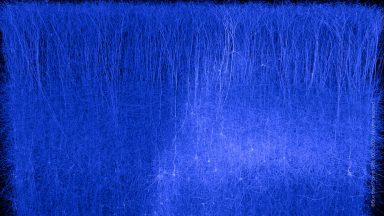
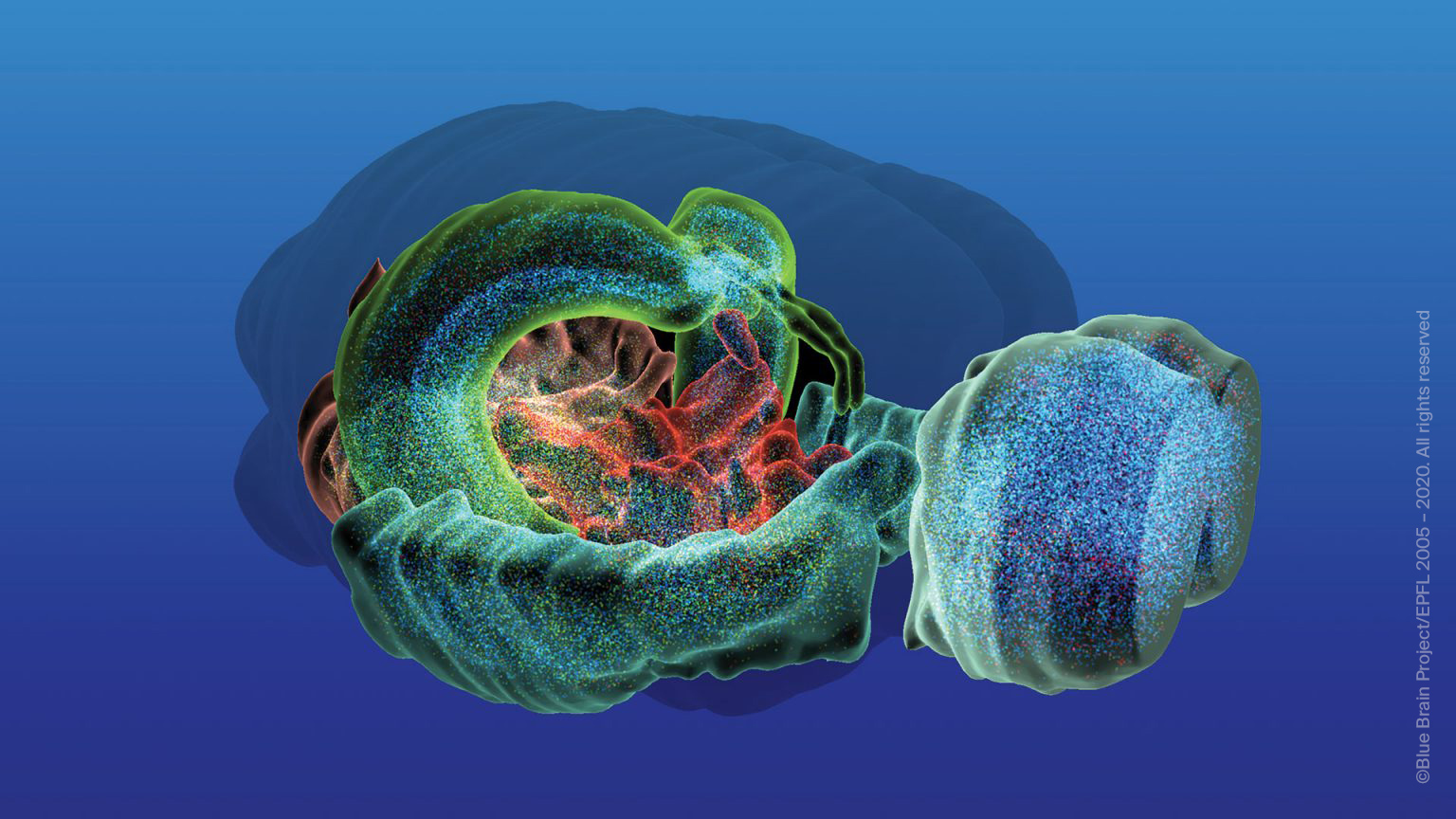
Running the Blue Brain simulation generates huge amounts of data. Analyses of individual neurons must be repeated thousands of times. And analyses dealing with the network activity must deal with data that easily reaches hundreds of gigabytes per second of simulation. Using massively parallel computers the data can be analyzed where it is created (server-side analysis for experimental data, online analysis during simulation). Given the geometric complexity of the column, a visual exploration of the circuit is an important part of the analysis. Mapping the simulation data onto the morphology is invaluable for an immediate verification of single cell activity as well as network phenomena. Architects at EPFL have worked with the Blue Brain developers to design a visualization interface that translates the Blue Gene data into a 3D visual representation of the column. A different supercomputer is used for this computationally intensive task. The visualization of the neurons' shapes is a challenging task given the fact that a column of 10,000 neurons rendered in high quality mesh (see picture) accounts for essentially 1 billion triangles for which about 100GB of management data is required. Simulation data with a resolution of electrical compartments for each neuron accounts for another 150GB. As the electrical impulse travels through the column, neurons light up and change color as they become electrically active. See some clips of the column in action . A visual interface makes it possible to quickly identify areas of interest that can then be studied more extensively using further simulations. A visual representation can also be used to compare the simulation results with experiments that show electrical activity in the brain. This calibration - comparing the functioning of the Blue Brain circuit with experiment, improving and fine-tuning it - is the second stage of the Blue Brain project, expected to be complete by the end of 2007. Here's a graphical representation of the Blue Brain Project Toolchain.
|
![]() |